Feeding a cat might look simple on the surface, pour food into a bowl and call it a day. But any experienced cat parent knows it’s rarely that easy. Between inconsistent schedules, picky eating habits, portion control struggles, and the guilt of leaving your cat alone for long hours, feeding can quickly become stressful.
That’s where cat feeders come in.
From basic gravity dispensers to fully connected automatic cat feeders, modern feeding solutions are changing how pet parents manage meals. These tools aren’t just about convenience, they help in creating structure, support healthier eating habits, and bring peace of mind to busy households.
In this guide, we’ll break down everything you need to know about cat feeders, how automatic options work, and how to choose the best solution for your cat’s lifestyle and health needs.
What Are Cat Feeders and How Do They Work
Cat feeders are devices designed to dispense food for cats in a controlled and organized way. Instead of manually filling a bowl multiple times a day, feeders help regulate when and how much your cat eats.
At their core, cat feeders serve 3 main purposes:
- Provide consistent access to food.
- Control portion sizes.
- Reduce feeding-related stress for both cats and owners.
Some feeders release food continuously, while others dispense meals at specific times. The more advanced the feeder, the more control you get over scheduling, portions, and monitoring.
This shift toward structured feeding is especially helpful for indoor cats, cats on prescription diets, and households where owners work long or unpredictable hours.
Types of Cat Feeders Available Today
Not all cat feeders are created equal. Understanding the different types helps you choose the one that best fits your routine and your cat’s habits.
Gravity-Based Cat Feeders
Gravity feeders are the most basic option. They rely on gravity to refill the bowl as food is eaten.
Pros:
- Affordable and simple.
- No electricity or batteries required.
- Easy to refill.
Cons:
- No portion control.
- Encourages overeating.
- Not ideal for cats with weight issues.
These feeders work best for cats who naturally self-regulate their eating, but they’re not recommended for food-motivated cats.
Automatic Cat Feeders
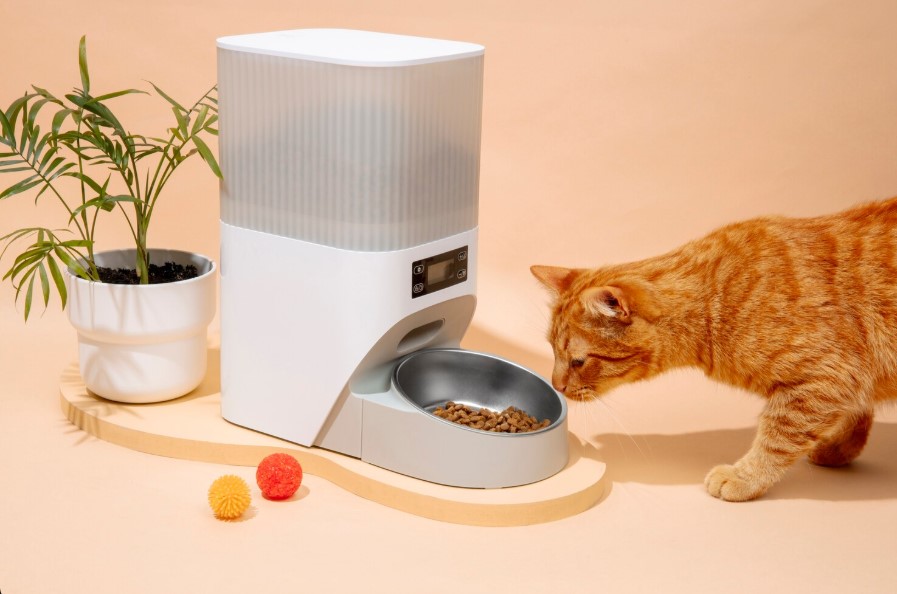
Automatic cat feeders take feeding to the next level by dispensing meals at preset times.
Key features include:
- Programmable feeding schedules.
- Measured portion sizes.
- Battery or plug-in operation.
These feeders are ideal for pet parents who want structure without constant supervision. They’re especially useful for cats who wake their owners early for food or need multiple small meals throughout the day.
Smart Cat Feeders with App Control
Smart feeders are the most advanced category of automatic cat feeders. They connect to mobile apps and often include Wi-Fi, notifications, and feeding history.
Benefits include:
- Remote feeding control.
- Real-time alerts.
- Feeding logs and portion tracking.
These feeders are popular with tech-savvy pet parents and those who travel frequently or manage multiple pets.
Why Cat Feeders Are Becoming a Must-Have for Pet Parents
The rise of cat feeders isn’t just about convenience, it’s about improving quality of life for cats and owners alike.
Consistent Feeding Schedules
Cats thrive on routine. Feeding at the same time every day helps regulate digestion, reduce anxiety, and prevent behavioral issues. Automatic cat feeders ensure meals happen on time, even when you’re not home.
Portion Control and Weight Management
Overfeeding is one of the most common issues in domestic cats. Many cat feeders allow precise portion control, which supports healthy weight maintenance and reduces the risk of obesity-related conditions.
Reduced Stress and Begging Behavior
When cats associate food with a machine instead of a person, begging behaviors often decrease. This leads to calmer mornings, fewer midnight wake-ups, and a more relaxed household.
Freedom for Busy Lifestyles
Whether you’re working late, traveling, or managing a packed schedule, cat feeders allow you to maintain consistency without sacrificing your routine.
How Automatic Cat Feeders Support Healthier Eating Habits
One of the biggest advantages of automatic cat feeders is their ability to promote healthier eating patterns.
Smaller, More Frequent Meals
Instead of one or two large meals, many feeders allow multiple small feedings throughout the day. This mimics a cat’s natural hunting and eating behavior and supports better digestion.
Preventing Food Competition in Multi-Cat Homes
Some advanced cat feeders are designed to limit access to specific cats, reducing food stealing and stress in multi-cat households.
Supporting Special Diets
Cats with medical needs, such as diabetes or urinary issues, often require strict feeding schedules. Automatic feeders help maintain consistency, which is critical for managing these conditions.
How to Choose the Right Cat Feeder for Your Pet
Selecting the right feeder depends on your cat’s behavior, diet, and your lifestyle.
Consider Your Cat’s Age and Health
- Kittens may need smaller, more frequent meals.
- Senior cats benefit from consistent schedules.
- Cats with medical needs require precise portion control.
Dry Food vs Wet Food Compatibility
Most cat feeders are designed for dry food. If your cat eats wet food, look for feeders with cooling systems or timed lids designed for moist meals.
Household Size and Pet Dynamics
In multi-cat homes, you may need multiple feeders or feeders with selective access features to prevent food disputes.
Power Source and Reliability
Choose feeders with battery backups to ensure meals aren’t missed during power outages.
Common Feeding Mistakes Cat Owners Make
Even with the best intentions, feeding mistakes are common.
Free Feeding Without Monitoring
Leaving food out all day can lead to overeating and boredom eating. Structured feeding with cat feeders helps prevent this.
Ignoring Portion Sizes
Many owners underestimate how much food their cat actually needs. Automatic cat feeders eliminate guesswork.
Inconsistent Feeding Times
Irregular feeding can cause anxiety and digestive issues. Automation ensures reliability.
Are Automatic Cat Feeders Safe for Cats?
Safety is a top concern, and rightly so. Most modern automatic cat feeders are designed with safety features such as:
- Anti-jam mechanisms.
- Secure locking lids.
- Stable bases to prevent tipping.
When used correctly and cleaned regularly, automatic feeders are considered very safe for cats of all ages.
Cleaning and Maintaining Cat Feeders
Proper maintenance ensures food safety and feeder longevity.
Cleaning Tips
- Wash removable parts weekly.
- Wipe food chutes to prevent buildup.
- Store food in airtight containers.
Keeping your cat feeder clean prevents mold, bacteria, and unpleasant odors.
Transitioning Your Cat to a New Feeder
Cats don’t always love change, so a slow transition works best.
Helpful tips:
- Introduce the feeder gradually.
- Start with familiar food.
- Place it near the old feeding area.
Most cats adjust within a few days when the transition is gentle.
Upcoming 2026 Trends in Cat Feeders
The future of cat feeders is smart, data-driven, and health-focused.
- AI-Powered Feeding Schedules: Feeders that adapt portions based on eating behavior and activity levels.
- Health Monitoring Integration: Tracking feeding patterns to identify potential health concerns early.
- Smart Home Compatibility: Voice assistants and app-based feeding are becoming standard features.
Final Thoughts
For modern pet parents, cat feeders are more than a convenience, they’re a practical tool for better feeding habits, healthier cats, and less stress. Whether you choose a simple gravity feeder or a fully connected automatic cat feeder, the right solution can transform your daily routine.
By creating structure, supporting portion control, and fitting seamlessly into busy lifestyles, cat feeders are quickly becoming an essential part of responsible pet care.
If your goal is consistency, convenience, and peace of mind, investing in the right cat feeder is a decision both you and your cat will appreciate.
FAQ’s
Are cat feeders suitable for indoor cats?
Yes! Indoor cats benefit greatly from structured feeding and portion control.
Can automatic cat feeders help with weight loss?
Absolutely! Controlled portions and consistent schedules support healthy weight management.
How often should I refill an automatic cat feeder?
This depends on capacity and feeding frequency, but most need refilling every few days to a week.
Do cats get scared of automatic feeders?
Some cats may be cautious at first, but most adjust quickly with gradual introduction.
Are cat feeders safe for kittens and senior cats?
Yes, as long as portions and schedules are set appropriately for their age and health.